
A Whole New Game
Steve Bieser finishes his second year with the Mizzou Baseball program. But not before he instills into it his own important values.

Steve Bieser can speak intelligently about any number of topics, but the only subject Missouri’s second-year baseball coach has trouble opening up about is Steve Bieser. It doesn’t come naturally to him to bring up the road he’s traveled — it’s one not many have taken. A native of St. Genevieve, Missouri, he went from a junior college baseball standout to the 32nd-round MLB draft pick of the Philadelphia Phillies, the 818th player selected in 1989. He went from career minor leaguer to a player who finally saw action in 60 games at the major-league level primarily as a catcher and an outfielder, a height that few prospects drafted in his position reach.
As a coach, Bieser went from the high school level to an assistant and then head skipper at Southeast Missouri State. Then in June 2016, he became the 14th coach in the history of the Missouri baseball program.
He’d rather talk about something else, though. But he’s getting a little better at it.
“I’ve had (former players) tell me they never heard me once talking about my playing days,” Bieser says. “I would never share as much because I didn’t want to make it about me. I don’t really look at that as ‘Steve Bieser made it.’ I look at it as just a blessing. I was given an opportunity, and the only thing I controlled was being ready for that opportunity. I wasn’t really given anything. But I wasn’t going to quit, wasn’t going to let anybody tell me that something can’t be done. I was going to keep working hard and believe that good things happen to good people.”
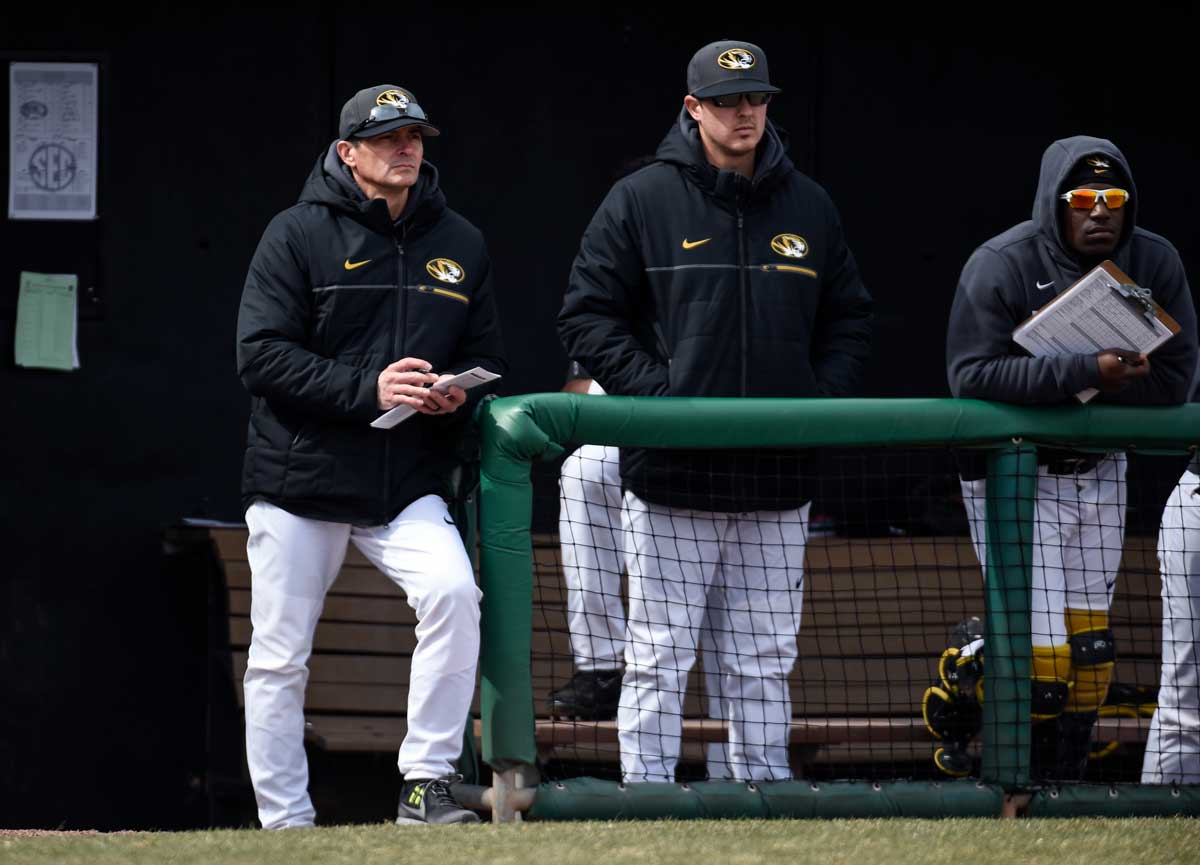
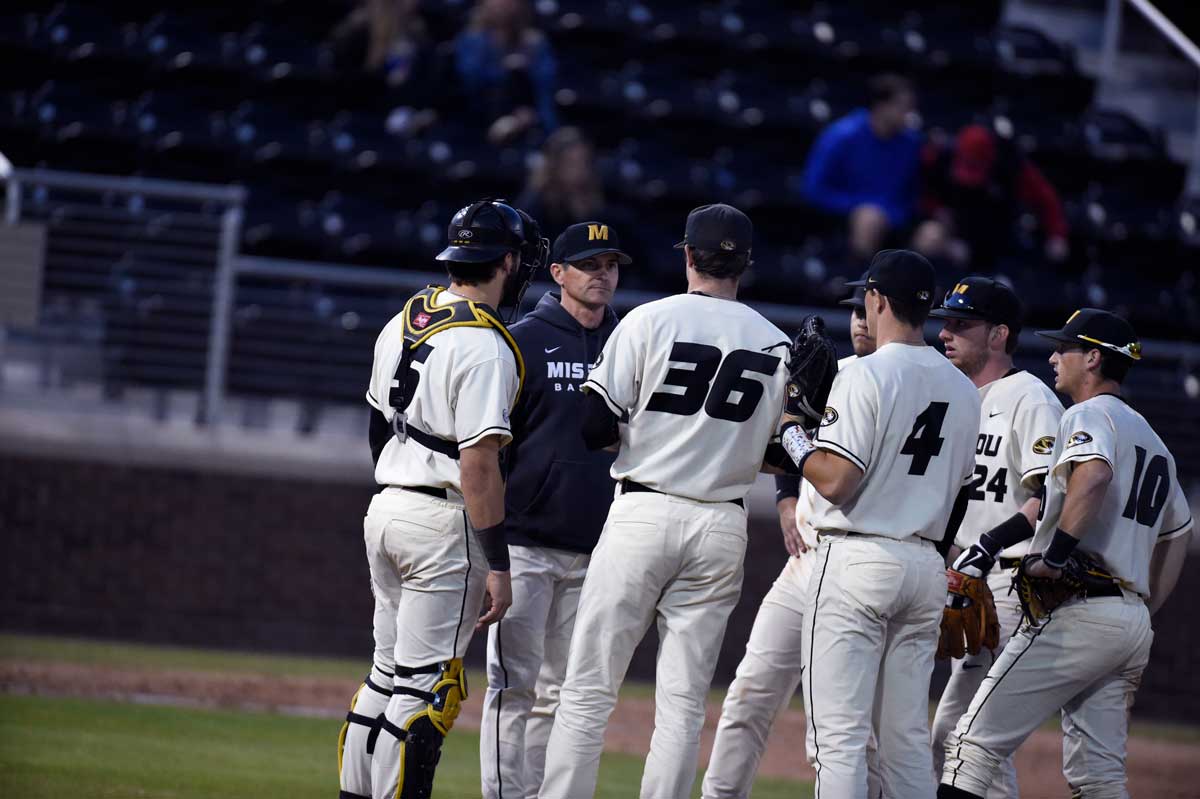
As he finishes his second year leading the Tigers, Bieser continues to instill his values into the program. His outlook encompasses concepts as complicated as tracking launch angle, exit velocity and pitch recognition for Missouri’s hitters and as simple as working hard, staying humble and getting his athletes to believe they’re capable of eventually getting to the College World Series in Omaha, where the Tigers haven’t been since 1964.
But that’s getting a little too far ahead. At the beginning of the season, Bieser and his staff had more pressing matters. New pitching coach Fred Corral had to figure out the right combination of arms to replace the quality innings recorded by drafted aces Tanner Houck and Cole Bartlett. Bieser has always run his team’s offensive strategy, but he had to take on more day-to-day hitting-coach responsibilities after former assistant Dillon Lawson left to work for the World Series champion Houston Astros.
It’s no wonder then that Bieser’s desk is uncharacteristically cluttered. “Last year, when you get the job, you hit the ground running,” he says. “And it doesn’t feel like I’ve come out of a sprint yet.”
Last year, Missouri was 2-5 in one-run games in SEC play during a season in which it went 36-23 overall and 14–16 in the league. Bieser points to the series against national powerhouse Florida — three one-run losses — as an indication of how big a difference the little things can make. A couple more one-run wins could have put the Tigers in the NCAA Tournament for the first time since 2012. “We were just as good as (Florida) on the mound, but they were a little better offensively, just from execution,” Bieser says. “Not from standing in the box and driving the baseball, but they executed. As our program continues to evolve, those are the things we have to be able to do: win one-run ball games against really good clubs.”
Even though he considers himself old-school, Bieser has been quick to incorporate the wave of analytics that has swept the sport. The players are eager to know their measurables and how their games can improve, Bieser says, but he also has to be wary of giving his hitters too much to think about during at-bats. For example, if you point out how often a hitter is swinging at pitches out of the zone, he may become too cautious and start taking pitches he should be driving. “It’s what information do you share and what information do you use to help yourself manage a game?” Bieser says. “It’s really nice when your gut is the same feeling as what the numbers back up.”
It all comes back to the players believing in the plan, presented to them by a coach who has plotted out his own meticulous path to uncommon success. “This group has really bought in,” Bieser says. “It’s probably been one of the best groups I’ve ever coached as far as showing up daily with a focus and intent, getting locked in and giving it their all every single day. That’s what has been so pleasing about Year 2. And to have that so quick, that’s saying something about our guys.”
This weekend, the Tigers will close out their season with a series against Tennessee, with TJ Sikkema, Michael Plassmeyer and Tyler LaPlante taking the mound in their last regular-season starts. To qualify for the SEC Tournament and strengthen their resumé for the NCAA Tournament, they’ll need to show up.
Photos courtesy of Mizzou Athletics